Transform Your Smile
Implant Dentistry
In Eastbourne
love your teeth
What is a dental implant?
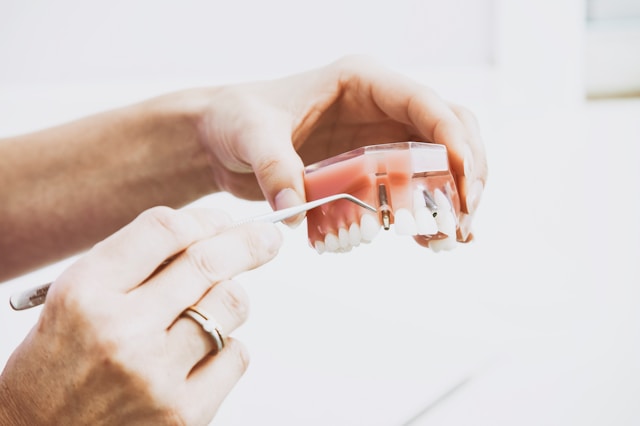
A dental implant is a replacement for the root of your tooth.
A dental implant provides the perfect solution to replace a missing or many missing teeth. Once placed, the implant can provide a platform on which to build. It can then help support the visible part of the tooth that you can see. For example, it can hold a new crown, part of a fixed bridge or removable denture.
love your teeth
What is a dental implant?
A dental implant is a replacement for the root of your tooth.
A dental implant provides the perfect solution to replace a missing or many missing teeth. Once placed, the implant can provide a platform on which to build. It can then help support the visible part of the tooth that you can see. For example, it can hold a new crown, part of a fixed bridge or removable denture.
trusted procedure
best for missing teeth
Dental implants are made of biocompatible titanium. The surface of the implant has been specially treated and roughened to allow your own bone cells to grow onto the implant, fixing it to the bone, so that the implant becomes rock solid. This process is called osseo-integration.
Dental implants were first used over 30 years ago. There is now a wealth of clinical research to show that dental implants can provide the best long term solution to missing teeth.
Single implant for single missing tooth
Two implants to replace three missing teeth
Several implants to hold a removable denture
trusted procedure
best for missing teeth
Dental implants are made of biocompatible titanium. The surface of the implant has been specially treated and roughened to allow your own bone cells to grow onto the implant, fixing it to the bone, so that the implant becomes rock solid. This process is called osseo-integration.
Dental implants were first used over 30 years ago. There is now a wealth of clinical research to show that dental implants can provide the best long term solution to missing teeth.
trusted procedure
best for missing teeth
Dental implants are made of biocompatible titanium. The surface of the implant has been specially treated and roughened to allow your own bone cells to grow onto the implant, fixing it to the bone, so that the implant becomes rock solid. This process is called osseo-integration.
Dental implants were first used over 30 years ago. There is now a wealth of clinical research to show that dental implants can provide the best long term solution to missing teeth.
Reasons to choose a dental implants
Why choose dental implants?
- Very strong and long lasting.
- Improves quality of life.
- Help supports the face and prevent premature aging effects.
- Prevents bone loss helping to maintain the jaw shape.
- Prevents drifting or tipping of adjacent teeth.
- Allows good chewing function - you can bite into foods just like you would with your natural teeth.
- Avoids cutting down adjacent teeth – such as can be required to replace a missing tooth with a bridge.
Bone Preservation
Dental implant therapy can help to prevent the gradual bone deterioration described above, since the action of the implant mirrors that of the original root, transmitting chewing forces to the jaw bone in a natural way.
CONVENTIONAL TREATMENT:
A tooth is missing
Two healthy neighbouring teeth are ground down to support a bridge – loss of tooth substance.
The bridge does not transmit chewing forces to the jaw bone – bone loss may occur.
DENTAL IMPLANTS:
A tooth is missing
Tooth replacement with a dental implant.
Neighbouring teeth remain healthy and intact.
Single tooth
Replacing a Single Tooth
A dental implant is an effective solution for replacing a single missing tooth. The implant, a titanium post, is carefully placed into the jawbone, providing a stable foundation for a custom-made crown. This approach ensures the new tooth looks, feels, and functions like a natural tooth, restoring both aesthetics and functionality. With proper care, a single-tooth implant can offer a long-lasting and durable solution to your dental needs.
love your teeth
The Treatment process
After careful treatment planning and any special diagnostic tests, treatment can begin.
Below we show the main parts of the treatment to replace two missing front teeth.
Stage 1
The sites where the teeth have been removed are allowed to heal. This is very important as it allows some new bone to form, but most importantly for front teeth, allows more gum tissue to form.
Stage 2
The dental implant is inserted. It is much like a small screw about the same size as the natural root of a tooth. Once placed, it is left for about 8 weeks to fuse with your natural bone.
Stage 2
The dental implant is inserted. It is much like a small screw about the same size as the natural root of a tooth. Once placed, it is left for about 8 weeks to fuse with your natural bone.
Stage 3
Once the implant has fused, impressions can be taken to construct the temporary crowns. The temporary crowns are then inserted.
Stage 4
After further impressions and tooth whitening, the final porcelain crowns are inserted. The crown is usually screwed in place avoiding the need for cements. This also means the crowns can easily be removed if there is ever a need.
Stage 4
After further impressions and optional tooth whitening, the final porcelain crowns are inserted. The crown is usually screwed in place avoiding the need for cements. This also means the crowns can easily be removed if there is ever a need.
Applications of dental implants
Treatment Options
Our treatment options for the transformative applications of dental implants in modern dentistry. From supporting replacement bridges to securing removable dentures and replacing multiple missing teeth, implants offer tailored solutions for enhanced function and aesthetics.
1. Replacement Bridges
Dental implants are so strong that they can be used to support a bridge. Two implants are carefully placed in the position of your natural teeth and then a porcelain bridge is fixed to the implants.
2. Securing removable dentures
Dental implants can be used to help retain full removable dentures. This will help to stop them moving around and avoid the need for the use of denture fixative. this can be particularly useful if you have struggled to control your full dentures. This process can transform your eating experience. Depending on the clinical situation, 2 or 4 implants can be placed and then the removable denture clipped to the special attachments on the implants.
2. Securing removable dentures
Dental implants can be used to help retain full removable dentures. This will help to stop them moving around and avoid the need for the use of denture fixative. this can be particularly useful if you have struggled to control your full dentures. This process can transform your eating experience. Depending on the clinical situation, 2 or 4 implants can be placed and then the removable denture clipped to the special attachments on the implants.
3. Replacing Multiple teeth
Dental implants can also be used to replace multiple missing teeth. Careful planning is undertaken and implants are positioned so as to support all the necessary missing teeth. It is not necessary to place an implant to replace each and every missing tooth. One implant can support more than one tooth.
BONE GRAFTING & SINUS LIFTS
Bone grafts
When teeth are lost, sometimes the bone around them is lost as well. If so this may need to be built back up if implants are to be placed. There are various types of bone regeneration that may be required in different situations. If you need one of these we will explain to you why and how this is carried out. Not everyone needs this as part of the treatment.
Guided Bone Regeneration
This is carried out at the time of implant placement if some of the implant is exposed due to thin bone. You will be unaware of the procedure apart from taking a few more minutes of surgery time. Special materials are added around the implant where there are small deficiencies in your own bone. This will help to maintain the look of the implant crown where it comes out of the gum and allow bone to grow over the implant keeping it strong. There are various materials to choose from for this technique and we have chosen our favoured materials following careful research.
Sinus Lift
The bones that make up your face are hollow and contain air spaces known as sinuses. The sinuses that sit above your upper back teeth are known as the maxillary sinuses. When an upper posterior tooth is lost, the bone that surrounds the roots dissolves away. As a result, the floor of the maxillary sinus drops down into the space formerly occupied by the roots of the lost tooth.
In order to place an implant, there needs to be sufficient depth of bone in which to place the implant. In upper molar areas, it is sometimes necessary to put the sinus floor back up to where it originally was by adding a bone substitute in order to create enough bone. This procedure is called a sinus floor bone augmentation or a ‘sinus lift’. There are a variety of ways that this can be done and we can talk you through the process.
A sinus lift involves carefully placing a bone substitute material into the sinus area. This material will become incorporated into the surrounding bone acting like a scaffold, allowing your natural bone to grow into the area. After a period of healing, usually around 6 months, the area is again checked for suitability and providing all is well, your implant can then be placed.
In some cases, it is possible to carry out the sinus bone regeneration and place the implant in one stage thus avoiding the need for two procedures.
Before/Afters
Implant Gallery
The two front teeth become infected and unfortunately nothing more could be done to save them. After discussion of the various options, the patient opted for dental implant treatment. Thorough treatment planning was undertaken to ensure an optimal result, ensuring the patient’s concerns were fully addressed. In this case, two implants were placed to replace the missing front teeth. The patient also under went tooth whitening before restoring the teeth to function with porcelain crowns.


Before/After 1
This incisor tooth had to be removed as it was no longer possible to save it. The patient wanted a fixed replacement and also something that was very strong and secure. After discussing the options, he chose dental implant treatment. The treatment was thoroughly planned and carefully arranged around a busy work schedule to achieve the desired result. We work closely with our dental technicians who make all the crowns, helping to achieve natural appearances to the smiles and teeth we make.
Before/After 2
This patient was due to get married and was keen to close the gap in her smile. The tooth had been missing for several years, but after only a few visits, the implant was placed and restored to fill in the gap in the smile ready for her wedding day.


Before/After 2
This patient was due to get married and was keen to close the gap in her smile. The tooth had been missing for several years, but after only a few visits, the implant was placed and restored to fill in the gap in the smile ready for her wedding day.


Before/After 3
This patient underwent several dental implants to help support a bridge that replaces 8 of the front teeth. He had a bridge supported by his own natural teeth for about 20 years which was very successful. Unfortunately, several of the teeth that supported the bridge began to fail meaning that the entire bridge then needed to be removed. A denture was constructed to anticipate this so that the patient did not have missing teeth whilst he underwent the dental implant treatment. After suitable healing, strategic implants were placed and only 4 were need to support the 8 missing teeth. The patient was delighted with the final result reported a real boost in confidence with his new front teeth.
Before/After 4
This patient under went dental implant treatment to replace a missing front tooth that was lost due to infection. The patient was delighted with the out come and here you can see the before and after result.


Before/After 4
This patient under went dental implant treatment to replace a missing front tooth that was lost due to infection. The patient was delighted with the out come and here you can see the before and after result.
Frequently asked Questions
No. Age is not a contra-indication to dental implant treatment. Providing your other general health is good and there is enough bone in which to place the dental implants, then age is not a problem. We will carefully assess your specific needs and advise you accordingly.
We work very closely with our patients to ensure that during the treatment, nobody knows that you have a missing tooth and you can continue to smile with confidence. If you need to be without a tooth during treatment, particularly to allow initial healing, we will carefully explain this to you prior to commencing treatment so you can be fully informed and plan your busy schedule accordingly.
We will work very carefully using carefully placed local anaesthetic to ensure that the placement of the dental implant is pain free. Afterwards, we will make sure you have the necessary painkillers to ensure you remain as comfortable as possible.
A routine case might take around 10-12 weeks. A more complex case may take longer. For example, if you have enough bone in which to place the implant, treatment time will be quicker than if you do not have enough bone to place the implant. We will discuss with you your individual treatment needs and give you the time frames that the treatment is likely to take.
Prior to dental implant treatment, it is very important that your other teeth and especially your gums are healthy. As part of your consultation, we will check your other teeth and gums to ensure that your mouth is as healthy as possible prior to commencing implant treatment helping to ensure a good treatment outcome. We will make any appropriate recommendations as required.
It is very important that your other general dental needs are maintained around your dental implant treatment. Your usual general dentist will be able to take care of this. It is usually recommended that any dental implant work is checked annually by the implantologist. We will advise you accordingly depending on your individual clinical needs.